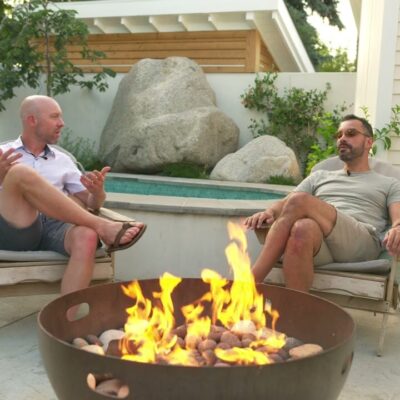
Discover how two powerful financial strategies work together to create lasting wealth that spans generations, not just years. In this revealing conversation, Nathaniel Ealy (founder of AugustaRule.com) sits down with the father-daughter legal powerhouse Rick and Harmony Durfee from Durfee Law Group to unveil a game-changing approach to wealth building.
Video Transcript:
0:10
Hi, I’m Nathaniel Elely. I’m here representing the auster rule.com. And what we do is we automate tax savings
0:16
for business owners through the Augusta rule, which allows them to rent their homes for up to 14 days a year tax-free.
0:23
And so we’ll explain what the rule is, you know, how it benefits business owners and how we automate that. And
0:29
then I’m here with uh Rick and Harmony Dery from Dery Law Group. And I’d like to hear from you both, you know, what it
0:35
is that you guys specialize in. You know, why our audience should care and so we can basically introduce uh each
0:41
other’s audiences and share why there’s there’s really a lot of cross-pollination and value uh between
0:47
our our audiences. So go ahead, guys. Super. Thank you, Nathan, and good to be
0:53
here. Uh, yeah, we’re This is Rick Dery from Derpy Law Group. Derpy Law Group derpygroup.com. We are a We provide
1:00
estate planning. We call it integrated planning, business planning, tax planning, asset protection, charitable
1:06
planning. All of those are related services to clients all across the US. And our client profile matches pretty
1:12
closely with yours. Most of our clients are business owners and they have houses. So if you have those those two
1:18
elements, you own a house and you have a business, uh you can be way more tax efficient if you appropriately
1:25
uh uh deploy the Augusta rule to uh in fact uh there’s some teased to cross an
1:33
ice, the dots may make it work. But if you if you do the the paperwork and document it properly, it creates uh some
1:39
tax efficient income. And so we love that for our clients. And uh and that’s
1:45
uh part of what we do. Some some things that make us unique, I guess. Uh although we do estate planning, our
1:51
focus is different than a lot of other firms. Uh typical estate planning
1:56
focuses on death. What happens when somebody dies and who’s going to get their stuff? Uh we look beyond that. We
2:04
call that dynasty estate planning. So, we’re not just planning for what’s going to happen with your stuff when you die,
2:09
but what is the stuff going to do to the people and what are the people going to do to the stuff? So, how can we preserve
2:15
that wealth and make it grow multi-generationally and benefit the family long term and be protected from
2:22
creditors and be tax efficient and all that kind of stuff. So, everybody who does that kind of planning, if not
2:28
today, someday will have a business and if not today, someday will own a
2:34
residence. So they may not need it now, but they will but they will need it eventually. Even if they don’t, you
2:40
know, if they’re starting out in their startup mode, maybe not. But sooner or later, they’re going to need this and they would benefit by uh using the
2:48
Augusta rule to their advantage. And part of that multi-generational planning is uh my part in things because
2:56
I am the generation 2 lawyer working to generation three, sorry, generation two
3:03
currently working at the firm. generation 3 lawyer in uh making sure
3:08
that as you know clients are are dealing with inheritance, how do they how do
3:14
they manage that? How do they uh appropriately decide how the stuff is going to affect the people and people
3:20
affect the stuff beyond just the current life cycle? Gotcha. So when I hear this, what are
3:27
the actual mechanisms that you guys are bringing to your clients to help them with these, you know, times of
3:33
transition? So, you know, we we got we’re talking about business owners, they’re uh creating wealth, they’re
3:38
creating value, they get paid for that, they get certificates of thanks, which we call dollars, you know, and those
3:44
accumulate. They accumulate assets. Um, you know, they probably got an entity or two. Um, you know, what are you guys
3:50
specifically bringing to the table? you know, what do people what do people pay you for? Um, and and then thank you with
3:56
their dollars. That’s a great question. I thank you for that. So, when we do estate planning,
4:03
you know, people have stuff. They have companies, they have they own properties, and if it’s just willy-nilly
4:08
thrown in a big box and okay, give it all to my kids when I’m dead, uh, you don’t get a lot of protection. But if
4:14
you structure it appropriately so that the trusts and the LLC’s and the limited
4:20
partnerships and the corporations are integrated so that they connect in a meaningful and tax efficient manner. You
4:27
get a whole bunch of good good deals. You get tax efficiency which everybody likes. Anybody who wants to pay more
4:34
taxes instead of less is crazy. Everybody wants to pay less. And and you also get asset protection. And so if we
4:43
can combine, wait, my taxes go down, my assets are protected, my assets are both
4:50
more useful to me today and transition through my family multigenerationally
4:55
and grow instead of shrink. And by the way, in the process, the people are benefited instead of ruined by having uh
5:04
money dumped on them at a time or under circumstances where they’re not ready or prepared. Then everybody comes out on
5:10
top. So that’s kind of the uh add-on that we provide. So we can work with
5:17
clients anywhere in the US. We have clients all over all over the country. Uh we have lawyers licensed in seven or
5:23
eight states. I don’t know the exact count. And if we are working with a client in a state where we don’t have a
5:29
licensed lawyer, we can get one if we need one. Uh a lot of what we do though
5:34
is is uh based on federal law, so it really doesn’t matter. And and because
5:41
we are in that multi-state environment, uh we are well equipped to
5:46
help people deal today. The clients are multi-state. They go, “Well, I got property here and there and everywhere and and I have companies here and there
5:53
and everywhere.” So, we can help them shop. what’s the best jurisdiction to form your entities in? And we like to
5:59
make them so that uh they’re portable and not dependent upon any one place and
6:05
can move as needed to capture whatever benefits or uh desirable outcome is
6:13
available in another jurisdiction. Excellent. Two two things stood out to me when I well there’s a lot of things
6:19
there, but two things popped to me when you uh spoke there, Rick. One was you said you help people make their their
6:24
companies or assets more valuable today. Could you unpack that for me? How do you guys make their assets more valuable
6:30
today? Sure. Well, lots of ways. The two the two that I’ve already mentioned are
6:35
number one, if the company or the assets are structured so that uh hostile,
6:41
aggressive, opportunistic, predatory plaintiffs uh you know can’t get it if
6:48
it’s unavailable to the to the litigation. uh monsters out there, that’s better. That’s uh more useful.
6:56
And if we’re paying less in taxes than we would otherwise have to pay, that’s
7:02
better. If we’re structuring this with the view towards uh there’s going to be
7:08
value that outlives you and we’re planning for what’s going to happen not just today, not just this year, not just
7:14
this week, uh and not just in this current one-year tax cycle, but in the next 50 year or 100 year or 500 year tax
7:22
cycle, then you’re you’re building for long-term growth. And and as part of that, it’s kind of like
7:29
well, let me say it this way. Businesses that are planning for what’s going to happen in a hundred years do way better
7:36
than businesses that can’t think beyond next week. So having that long-term
7:41
vision uh changes the way people do business changes the way they manage their
7:47
investments and their finances. I guess a story that’s in one of my recent books that I just published called trust issues. uh client situation where uh
7:57
this investment advisor was pitching we some we have long-term investments and the and the client said what does
8:03
long-term mean for you and he said well sometimes five maybe even 10 years out and the client said completely
8:08
straightfaced long-term for our family means 200 years. Uh so that’s
8:15
people that are thinking about what are my investments going to do long-term which means beyond my own mortality.
8:22
That’s a different mindset and you get different results. There we go. And that’s the key right
8:28
there because this was the second thing and you just naturally went right to it. You’re talking about long-term. You’ve used the word dynasty with me when we’ve
8:34
talked in other conversations. multigenerational you mentioned you know and I think you just really put your
8:40
finger on it which is this creates a different outcome like this mindset this
8:45
approach actually creates tangible outcomes today and outcomes tomorrow and outcomes that outlive us and I think
8:52
that’s something that you guys are are really bringing to the table uniquely I find that approach to be extremely rare
8:58
when I talk to you know various wealth adviserss various counselors you know legal or otherwise uh you know across
9:04
the entire uh you know breadth of professionals in the space. And so
9:10
that’s what makes me interested to have a conversation with you guys and and to you know continue one um is I think
9:15
we’re in alignment on how we approach things. It’s not just a oh how do I get a quick buck which hey you know
9:21
everybody likes a quick buck. You know Zig Ziggler’s quote uh you know money is
9:26
isn’t everything but it’s reasonably close to oxygen is pretty spot-on. You
9:31
know comes in handy. It’s where it comes in handy. And we’re talking about this over time because
9:37
really, you know, the other side of that is, okay, well, now we have money, but what are we actually doing with it? What’s the benefit received? And that’s
9:44
what people often don’t actually bring the conversation towards, but that’s really what we’re all operating around.
9:50
Okay, I’ve got money, but what am I actually getting with that money? So, you know, I want to use a metaphor that
9:55
we just did this bike ride that was more than 400 miles over the course of a week
10:01
and we saw a lot of families, moms or dads, with kids on the back of their bike. Yeah.
10:06
And and now contemplate this because this is what we do with money. Eventually those kids, the point is
10:12
there’s going to come a point when not very old, 9, 10, 11, that kid’s going to
10:18
be on their own bike pedaling on their own power and it’s going to go hundreds of miles in just a few days. Now, what
10:23
happens if the kid never does that? What happens if Can you imagine an adult on the back of their parents’ bike, hey,
10:30
keep pedaling, mom? Keep pedaling, Dad. I I need to go to college. I need to buy a house. I need to buy a car. And they
10:36
never learn to ride the bike themselves. In fact, there the kids thinking, “Man, I can’t wait till mom or dad dies
10:41
because then I give the bike to myself.” Well, if they’ve never learned how to ride the bike when mom and dad are gone
10:48
or can’t pedal anymore because they’re now they’re aged. They’ve aged out of pedaling. Suddenly, what’s going to
10:54
happen to the bike? It’s going to crash. It’s going to crash and burn. And and that kid isn’t going to know what to do.
11:00
Which is why, by the way, generationally, people who who just think about, “Oh, I’m going to give my
11:06
bike to my kids when I’m dead.” does no good if the kids can’t ride the bike. And and so the kids have to learn how to
11:12
ride themselves. So they’ve got to learn how to create their own wealth and not be dependent upon mom and dad. And and
11:19
when you have that mentality, you get a you get a family full of bike riders as opposed to a family full of passengers
11:25
pushing mom or dad to pedal faster. Yeah. And zooming out from that analogy, what we’re really talking about here
11:30
often is businesses, you know, plural. And when mom and dad pass it on,
11:36
that bike rack isn’t just a bike rack. It’s a whole bunch of careers. And the ripple effect all those families
11:42
and damage is incredible. Yeah. Go ahead, Harmony. B business is where the entrepreneur who
11:49
started the business and they’re running the business and operating the business. If they aren’t actively teaching a
11:55
successor, what happens when the business owner dies? The business is gone. Everything was in their head.
12:02
everything was was in how they do it and suddenly there is no business anymore.
12:07
Whereas if the business owners are actively teaching successors, hey, here’s how I do this. Here’s how the
12:14
business works. Here’s how it operates. And if generation two or generation three, they’re working in the business.
12:20
when it comes time for the the entrepreneur who started the business
12:25
and who pioneered this at the beginning for them to step down, retire, go on vacation, do other things, or if they
12:32
pass away, hey, you already have someone who’s been working in the business and who’s been pedaling their own bike and
12:38
they understand how it works. So when they get it, it’s significantly easier to keep it going. Because if if you’re
12:45
just operating under it’s me and when I die it’s done, it’s not going to go
12:51
anywhere once you’re dead. It’s gone. It gets wiped off.
12:56
And I want to add to that, by the way, that doesn’t mean they have to be in the same business. With among my eight
13:02
children, only one of the eight is in the same business as me. Most of them are doing other businesses that have
13:09
piggybacked off. Yeah. Piggybacked off of or or taken the
13:14
skill set they learned while working over here and and now they’re doing something else in another business. They’re pedaling their own bike and they
13:20
and they took their own bike on on their own path and that’s great. So the family wealth is not limited to what I was able
13:28
to to develop. Everybody is developing their own wealth. Yes. Okay. So what are you guys doing?
13:35
So, so you obviously have a philosophy and an approach. You know, what are some of the tools that you’re bringing to the
13:41
table to equip people along these lines other than, you know, some YouTube videos or podcasts like this? You know,
13:47
what’s actually when I’m paying you and engaging your services, what are the tangible products that I’m getting that
13:53
align with what you’re just speaking to? So, one of the one of the pieces, first of all, there’s going to be business
14:00
entities. There will be LLC’s and corporations and limited partnerships and other business trusts and things
14:05
like that. So, we’re gonna we’re going to use those. But one of the key core elements is what we call a dynasty
14:13
trust. This is a trust that is designed from the from the ground up to outlive
14:20
us. It’s designed to last a long time. So, it has some very specific features.
14:25
We have succession. How who’s going to be in control 100 years from now when all of us are dead? Who’s going to who’s
14:31
going to get benefits? What benefits are they going to get? How do we throttle the benefits so that they don’t become
14:37
self-destructive? How do we protect the principle so that it grows instead of shrinks? Uh so we have thought through
14:43
and have carefully mapped out all of those things. And by the way, there are
14:48
a an endless number of variations on how that can be done. So often we are we’re
14:54
fine-tuning the details of that to match the family philosophy and culture and
15:01
and ideas of of the client, but it it’s still focused on that core idea that
15:08
this is going to outlive you. uh similar similar to candidly, you know, the
15:14
founders of our nation wrote a constitution that uh anticipated that things were
15:22
going to happen long after they were all dead. And guess what? Things have happened, good and bad, and and and and
15:28
people have conflicting opinions. This was good. No, that was bad. So, but there’s a mechanism to deal with that. a
15:35
mechanism to accommodate uh changes of leadership, a mechanism to accommodate
15:41
changes of of the rules that govern, a mechanism to accommodate changes of what
15:46
what property or business or or things are possessed. So we anticipate all that and build that into a trust. So that
15:53
kind of trust is fundamentally different than the classic trust that
16:00
people get when they go to do estate planning. It’s it it has some things that are the same. Oh, well, every every
16:06
vehicle with four wheels and a windshield and doors and a motor to make it go is a car, right? Yeah. Well, cars
16:11
can be vastly different one model to the next. And so, this trust device is
16:18
vastly different than what an ordinary uh I want to avoid probate and give my
16:23
stuff to uh so and so when I’m dead kind of device. Yeah. And I I want to connect that with
16:29
some of what the Augusta rule does too because uh I know that when we met uh
16:35
you gave a presentation on the ac cruel benefit of the Augusta rule using it
16:41
year after year after year and how it improves with time. That’s one of the other effects of our dynasty trusts.
16:49
They improve over time. The more you use them, the greater the benefit is. So it
16:55
it it appreciates in value as it gets used. You develop interest on the value
17:02
of the documents that you have because the more you put into it, the more you get get out.
17:09
So let’s think about this. In fact, let’s apply this directly to the Augustine rule. We want to have a business event in our residence and we
17:16
want the company, our business to rent the residence for that business event,
17:22
right? That’s that’s how the August rule works. it’s going to pay the day rate uh Airbnb rate or whatever for the
17:27
residents for that day. We’re going to have a business event at the residence and so we rent it and that’s taxfree
17:33
income to to the homeowners which is kind of cool. So what’s that? What could that business event be? Well, a lot of
17:40
things. First of all, we’re going to have an agenda for the family business meeting.
17:47
We’re to elect officers and directors for our companies going forward. We’re going to we’re going to consider uh uh
17:54
new purchases, new new employees, new directions. We’re going to consider innovations. We’re going to take this
18:00
strategy instead of that strategy. And we’re going to memorialize all of that in appropriate documentation. So, we in
18:07
fact had a business event at our home, a real one. It wasn’t just fake. It’s not
18:13
phony. And in fact, as a consequence, not only did we intend to make more money, we made more money. So, so and
18:21
and when we make more money, we pay more taxes. So, the tax man is happy because ultimately they their tax revenue goes
18:28
up because our income is up, but we get this little piece of the income which because it has a business purpose and
18:34
we’re taking advantage of specific rules that are permitted under the tax code, we we get uh some tax favored treatment
18:41
of some of some of the cash flow that’s coming off of that business activity. Yes. Exactly. Yep. And when you’re doing
18:49
that, so that’s I mean that’s kind of like the flip side of the coin of the August rule. Everyone gets attracted by the taxfree income. But the flip side of
18:55
the coin is what you’re actually increasing in revenue uh through the planning uh that you’re regularly doing
19:01
at your home. And now does that planning have to be at the home? Well, yeah, for the August rule, but it’s often planning that’s just not done period by any
19:08
business owner. Yeah. Just in such a hurry, they skip it. And so we use this as a mechanism to say, “Look, here’s some money by the way.
19:15
Let’s make more of that by by doing this planning regularly, right? It’s amazing if you use the tax
19:21
code to get this tax benefit, it actually helps you make more money. Yeah. What
19:26
your business improves. Yeah. Which and that’s part of that’s part of the vision that we bring too,
19:32
which is why there’s a good correlation between uh the planning we do and and the Augusta rule implementation that
19:39
you’re uh promoting and and and facilitating. Uh there’s a natural correlation there. We we are preaching
19:46
the same gospel here. Hallelujah. Join in the song. Uh so let me ask you this then. So you
19:53
guys you’ve done you do the August rule for yourself, Rick. Um not many do it for themselves. Um you know I I I did it
20:00
for myself before I developed you know our software with uh my partner John Hire who’s a 30-year experienced tax
20:07
attorney. um tell me, you know, what the journey was like for you to initially learn about the rule, get comfortable
20:13
with the rule, um actually, you know, walk it out, uh you know, that type of thing because that’s a big hurdle for a
20:19
lot of business owners. And one of the things that I found is, you know, it took me a long time to get comfortable
20:24
as a non, you know, lawyer, as a non tax pro. Uh and not only that, it distracted
20:31
me from the main value creation in my business. And so when we developed our done for you product, that was one of
20:36
the chief goals is let’s not distract from the value creation that the business owner does. So I would love you
20:42
to to speak to as as a as a legal professional. You you know you had knowledge about this, but then you had to enact it. What were some of the
20:47
hurdles you had to overcome? What were some of the things that you had to do to make it actually benefit you?
20:53
Well, I’d actually like to interject on that first. Go ahead. You
20:58
add uh one of the things about how Rick has has
21:05
run his business is to be family oriented. So well before the Augusta
21:11
rule was around, our family has councils where all of the
21:17
siblings will meet together and discuss the various business ideas and entrepreneurial spirit that we have. And
21:24
so we’ve been having family business meetings well before there was a tax benefit that that has been every week of
21:33
life growing up in Rick’s household. And and so while there is to some extent the adapting of
21:40
okay, how do we fit into the Augusta rule niche aspect, but that’s already
21:47
something that’s in the spirit of of our family and that we encourage to be in the spirit of our clients because one of
21:53
the reasons why me and each of my siblings are all pedaling our own bikes and we’re all working in our in our own
22:00
areas and are not fully dependent on our parents is because we were starting that
22:05
from day one, you know, I I I never felt like there was going to be a reason for
22:12
me not to be entrepreneurial. So, I was starting that at the beginning. It was okay, I’m going to do this. Now, the
22:19
question is how and and that that spirit has been around in our family for a good
22:25
while and we encourage clients to do the same thing. One of the things that we strongly recommend to clients is to have
22:31
family counsels because the more you actually talk to the people who are involved in your estate plan, the better
22:37
you will be at knowing what your estate plan is and the better they will be at preparing for the opportunities that
22:44
come up with businesses and entrepreneurial spirit or you know when they inherit stuff and all that. So, so
22:51
to some extent there wasn’t that much adaptation to the Augusta rule because it was already part of our family
22:57
culture well beyond uh and before the Augusta rule was around.
23:03
Nice. Let let me add to that. There was always a tax motivation please. Nice.
23:09
Okay. family trying to integrate my family in and teach my family that very
23:14
very family oriented. But uh every time we went anywhere for anything, we had a
23:25
business purpose and and we all wherever we went, we were looking at and and in
23:32
fact buying rental properties. So, so there no there’s nowhere in the United
23:38
States of America that you can’t go to look for rental properties and you’ll find them and there they are. And and if
23:44
in fact you’re investing in them, uh guess what? Why were we in that place?
23:50
We were in that place on a business trip to explore the purchase of rental properties. And we in fact would gather
23:55
up the materials. Well, here’s the properties we looked at. We checked out the pricing. We checked out the
24:01
marketplace. Do we want is this the kind of place we would like to own properties? And then we would have a
24:07
meeting about that and we would memorialize that meeting with minutes
24:12
and and we would have an agenda. And you know, you ask what hurdles happen are are go along with that. Here’s one of
24:19
the hurdles. When everybody’s dressed in their jackets and coats and and and have
24:25
their snowboard in their hand and go, “What? Shut up. Here’s the agenda. Here’s the
24:31
agenda. No, we’re going to conduct some business and we in fact conduct the business and your input is essential.
24:38
And so they learned there there was some early resistance candidly, especially with the teenage brothers.
24:45
Yeah. But but eventually they figured out, oh wait, uh this is how we paid for
24:50
this trip because we’re here on business. Yeah, buddy. And in fact, we we will make more money
24:56
as a result of this trip again. So the tax man shouldn’t feel bad about this trip. this is a revenue generating trip,
25:02
but uh in the meantime after we’re after we’re done doing the business or in between the business, let’s hit the
25:08
slopes. Uh so so we uh and and this is
25:13
part of I guess you know live life with a view towards what’s how are the
25:20
ripple effects of your life going to outlast you? But also live life with a business purpose. There you go.
25:26
We do and everywhere we go we have a business purpose. Perfect. And then you guys are very
25:31
abnormal in that which is awesome, right? Uh and so you’re already set up
25:37
to be prime candidates for the Augusta rule because of how you approach things, the regularity of the business focus
25:44
that you have not only, you know, at work, but you’ve brought that into your family culture. And so what we found
25:50
when we built our product is so the August exists. So why do we need a product around it? I mean, it’s there like anybody can do it, right? You can
25:56
get a spreadsheet. You can go find your own comps. You can get your own rental agreements. You can do all these things. But our product is a done for you
26:03
product. And so for people who don’t already have these habits built in, you know, they they probably have business
26:08
at home already. We’re not trying to get people to change their habits because that’s really hard. What we found is
26:13
most business owners already have legitimate meetings at their home. We’re simply trying to capture those. And so
26:21
what we’ve done is they don’t realize what opportunities they have. That’s right. That’s right. So what we
26:26
do is we have a 15 to 45 minute onboarding with the business owner one time at least once annually just to you
26:33
know check in on things and after that we actually train the person who has calendar access on their team so an
26:40
executive assistant you know uh their their office manager uh you know there’s
26:45
various roles that can take care of this but then that person spends less than three hours a year and all of a sudden
26:50
they’re turning those three hours a year plus that 15 to 45 minutes of the owner into thousands if not tens of thousands
26:57
or sometimes even six figures of tax-free income that they didn’t even know they could have had. And so what we
27:03
found is there’s kind of this intersection of, you know, you guys are tax experts and in legal, you got this sphere over here where you’re like, we
27:09
teach this, we know this, we know how to implement it. We’ve got kind of the the tax filer sphere. So you’ve got one
27:15
sphere here, then one sphere here, then you got the business owner. So three circles, but they don’t always inter, you know, intersect. It’s not quite a
27:22
vin diagram. And so we’re trying to be right in the middle there and plug those three together. We’ve got the tax
27:27
expertise through John and legal expertise. We’ve got the tax filer expertise because John also has filed
27:33
thousands of tax returns if I’m not mistaken. And so we’ve got those two and we also collaborate with the tax
27:39
professional of the business owner. But then we’ve got the business owner whose habits we’re not trying to change. We understand business owners. I’m an
27:45
entrepreneur. John’s an entrepreneur. So, you know, I I specialize in building systems and teams that are self-managing. So, my companies are
27:52
self-managing, which is why I’m here traveling with my family for four weeks and business is getting done and I can
27:57
hop on a call like this, but I just came from the beach minutes ago, you know. And so, and that’s not to say that we’re
28:03
not conducting business. It’s because our ability to create teams and create functional outcomes that don’t require
28:10
us and then plugging that into this specialized rule. And we want that for other business owners. We want the same
28:16
freedom that you talked about, Rick, you know, that you that you have in your family, Harmony, you know, that I’m experiencing and we want to build that
28:23
freedom and we want to build it through things that leverage what you’re already doing. Yes.
28:28
Business meetings at home. So, and then we want to connect them with people like you who bring value and
28:34
you’re like, look, we can we can create this protection. We can create these systems and processes. We can put all
28:39
this in place. we can teach you. And you know, simply by engaging both of our
28:45
services, we’re literally putting more money in your pocket, protecting your money, making your money last, not only
28:51
in your lifetime, but past your lifetime. And that’s what that’s the message that I wanted to bring out today when when we’re talking. So, um, that’s
28:57
that’s pretty much the point. Sweet. So, from a compliance perspective, a couple of elements.
29:03
Number one, if if the if the business entities don’t exist and if they’re not
29:08
in compliance and properly documented, the Augusta rule falls down. Yes.
29:14
Number two, if the paperwork and the recordkeeping is not done, it falls
29:20
down. It’s not audit proof. So to be audit proof, you have to document the the what happens to qualify for the
29:27
August rule. And that’s the piece that you bring, which is awesome. A piece that we bring is that business entity
29:34
structure and compliance on the legal side. So that uh when the tax reporting
29:41
is done, you’re going to have the paperwork is going to be there to support the Augusta rule treatment of
29:48
the of the cash flow. We’re going to have the piece we bring is we’re going
29:53
to help make sure that legal entity is structured and and in compliance so that
29:59
it also qualifies because on audit I can tell you this if you get audited they’re going to say where’s your paperwork for
30:06
that Augusta deduction and and you have to have it and they’re you need to say yeah right here. And they’re also going
30:12
to say though where are the minutes for your business entity? Where are uh your
30:18
your filings with the local secretary of state or corporation commission? Where are the resolutions? And and that’s a
30:24
piece that we can do on the on the on the corporate or business entity side as
30:31
well as uh helping structure that. So if while you’re having that event at your
30:37
home, if I don’t know, somebody drops the punch bowl and there’s an injury, uh
30:42
you you’re protected from that liability. I I want to add another kind of quirky nuance here. When you’re doing this
30:48
multigenerationally, you can say, you know what, uh, we’ve had our our 14 days of of, uh, events at
30:56
our house. The next business meeting is at your house. That’s right. You totally can. Yeah. One
31:04
thing that John taught me, too, is that you could actually have an event that qualifies for yourself, Rick, at
31:11
Harmony’s house. Yes. You can have Yeah. your children’s houses qualify for you, not just for
31:17
them as well. And that’s and that’s so unknown. And it’s also people don’t realize you can do this for multiple residences. So our our typical client
31:23
has between two and four residences. And then they also don’t realize that it doesn’t have to be just in the US. It
31:29
can be in the North American area because we have treaties with a bunch of, you know, uh, Central American
31:34
countries, Canada, Mexico, you know, Caribbean. And so we’ve got clients with houses, you know, around the whole area.
31:40
Yeah. Well, it doesn’t matter where the house is. It matters where the owner is. That’s right. If so, if the owner is in the US, you
31:47
can pay a US owner for the use of their property in Panama or wherever. That’s right. Yep. Well, good. Well,
31:54
let’s bring this in for a landing. Is there anything else that we want to share with our our uh respective audiences or um I think that about kind
32:00
of covers just a brief overview and and I know I would direct people to, you know, you look at your website, look at
32:05
our website um the augustrule.comsave. Um, we’ve got some free bonuses to give
32:11
to people if they jump on. Um, where should people go to find you guys and learn more about your product and offerings?
32:16
S there are two places, uh, derpyawgroup.com and and our YouTube channel. It It’s
32:23
been our experience that to implement something like this, people need to know what they’re doing. They need to get
32:28
educated. And the decision window, am I should I do this or not, isn’t something they’re going to make, oh, I I made a I
32:35
thought about this for, you know, 30 seconds. like picking an ice cream flavor. It takes a little longer. So,
32:41
get educated, learn, learn. Go to our website, go to our YouTube channel, go to your YouTube channel and website,
32:47
derylawgroup.com or look for Derpy Law Group on YouTube
32:52
and subscribe to our channel. We have hundreds of videos, hundreds of articles and things like that that you can learn,
32:58
including a number about specifically the Augusta rule. And we’re happy to
33:03
work with uh austerrule.com. that’s very compatible with what we do.
33:09
Uh we’re team players and collaborative. So, uh we can we will work with you. And
33:15
if you’re working with them already and you’re thinking, “Wow, is my estate plan or my legal plan or my asset protection
33:22
plan or my other elements of the tax plan is a complete uh we can help you.”
33:27
And we again because we are team players and collaborative, we can work with Nathaniel and his and his team, John and
33:34
everybody on on that side. Yeah. I’d also like to add uh Rick just published a book called Trust Issues.
33:42
That’s another great resource in terms of learning how trusts work and evaluating your own trust if you have
33:48
one. It’s available on Amazon. It’s a great read. Um and that that’s another great resource in terms of figuring out
33:55
how to evaluate what you need and if you need to level up or if you want to level up. Excellent. That’s fantastic. Yeah, we
34:02
can I should mention our YouTube channel as well. lots of videos dropping in there daily or should you say weekly and
34:08
uh so building building a uh you know basically a volume of information because you know we talked in rough
34:15
terms about our services but just like you mentioned you’ve got a bunch of education because there’s so many specifics and we have the same thing so
34:22
uh we’ve got bonuses to give away if you go to the website we’ve got a YouTube channel and uh you
34:29
know if you hop on a strategy call we actually engage with our clients and tell them exactly how much they can say
34:34
with their specific circumstance. And one of the giveaways is, you know, our the 10 rules of the, you know, that
34:40
matter when you’re when you’re taking advantage of the Augusta rule. Um, you know, because we want to maximize and
34:45
optimize people’s results. And what we found is people don’t often get all 14 days deducted. They’ll get like six days
34:52
or 10 days, but they won’t optimize it. And one of the things our service brings is let’s get all 14 for you, right? And
34:58
let’s make this build, you know, multigenerationally. let’s make it build for decades in your career so it turns
35:04
into millions of dollars um that you would have uh that you would otherwise pay to the tax man which we’re not fans
35:10
of. We want it to go where value is created and that’s in the pocket uh you know of business owners that’s in your
35:16
pocket. So yeah and again if you do it right you actually make more money and and the tax
35:23
man will be just fine. That’s right. He’s it’ll be just fine. We’ll leave it at that. Thanks for
35:28
joining us today. Cheers. Thank you all. Great to visit with you. Pleasure talking.
35:39