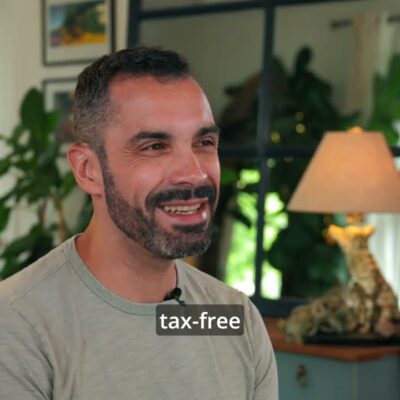
The Augusta Rule isn’t just about lowering taxes — it’s about keeping more of what you’ve earned and putting it to better use than the government ever will.
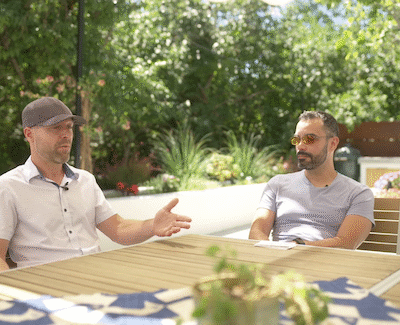
In this conversation, John Hyre explains why the money you save through smart tax strategies like the Augusta Rule can fuel real investments, family security, and causes you care about — instead of waste and bureaucracy.
Video Transcript:
0:00
The specific question, how does the
0:01
Augusta rule help? I mean, it helps you
0:03
keep more of what’s yours. And a I think
0:06
that’s a good thing. The people who work
0:08
for it are the ones who deserve it. If
0:09
you don’t agree with that, pay more
0:11
taxes. Just ignore me. Shut it off right
0:12
now. We’re not for you.
0:14
Yeah.
0:14
Uh and follow your principles. If you
0:16
vote for high taxes, pay them.
0:20
But if you look at what individuals do,
0:23
they invest. They invest in biotech and
0:27
curing cancer, in making products that
0:29
make our lives better. And no,
0:31
capitalism isn’t perfect. Nothing human
0:32
is, but it beats the alternative. If you
0:34
look at what government does with the
0:36
money, they’ve proved time and time
0:38
again at on a good day, they’re just
0:40
going to waste it.
0:41
Yeah. The stat I’ve heard is that the
0:43
same project from the government will
0:44
cost about 300% more.
0:46
That’s what we’ve seen.
0:47
That’s highly optimistic.
0:48
Yeah.
0:49
Um on a bad day, the government will use
0:51
the money for outright evil. Mhm.
0:53
Um encouraging people to do things that
0:55
they shouldn’t do
0:56
the nine projects.
0:56
Yeah. I’m assuming Yeah. We get Well,
0:58
and I’ll give you an example. Right now,
0:59
um light rail in the US costs six times
1:03
per mile than it does in Europe.
1:05
And most of that, by the way, is due to
1:07
excessive environmental litigation.
1:09
Yeah.
1:09
You can’t get anything done. You can’t
1:10
build anything. Why would we continue to
1:12
feed this beast, this bloated beast that
1:14
enriches itself? I I just don’t see much
1:18
good coming of that. So, morally, that’s
1:20
where I’m at. Now the larger question of
1:22
what else can people do because there’s
1:23
the Augusta rule and we’re biased to
1:25
discuss that you know I think the larger
1:27
picture is people have not been very
1:29
good citizens
1:31
when what other point in time would you
1:35
rather exist we live in the wealthiest
1:38
place in the wealthiest time and someone
1:40
will say oh no Switzerland’s wealthier
1:42
the general larger point is in the west
1:44
we live in the best time and place in
1:46
the history of humans
1:48
this is a marvelous time for all of its
1:50
flaws Because humans are around and what
1:51
do humans do? Screw things up. That’s
1:53
what they do. You know what people need
1:55
to do? They need to get involved.
1:56
They’re terrible citizens. They don’t
1:58
vote in the primaries. They don’t
2:00
contribute with some of this money we
2:01
save them
2:02
to causes to help preserve this
2:06
wonderful but imperfect thing we have
2:09
and and it’s fading. We see our society,
2:11
we know it’s sick. We know things are
2:13
wrong. Mhm.
2:14
So maybe take a little bit of the money
2:16
that’s saved
2:18
and with some gratitude, which I have
2:20
vast gratitude. I’m so grateful for the
2:22
era and place I was born in. I did
2:25
nothing to deserve it. I don’t feel
2:26
guilty. I feel gratitude
2:28
of of when and where I am. And I try to
2:31
do my part. And maybe when people have a
2:33
little bit more left over,
2:35
you can do all sorts of worthy things.
2:37
Build a family. A lot of people won’t
2:38
build a family because they don’t think
2:39
they can afford it.
2:41
but also protect this wonderful yes it’s
2:44
imperfect but this wonderful thing we