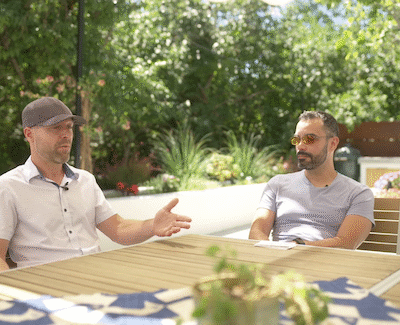
In this video, tax attorney John Hyre explains the level of research he puts into understanding the tax code, including the Augusta Rule. And when John says “research,” he doesn’t mean reading a few articles online. He means going through full case files, depositions, cross-examinations, expert testimony, and IRS briefs… even when it required flying to Washington DC and sitting in a room with two chairs and a shopping cart full of documents.
This is the expertise behind our implementation:
- Deep, primary-source case law research
- Full understanding of how the IRS builds and argues a case
- Distilling complex tax law into something business owners can actually use
If you’ve ever wondered why The Augusta Rule™ platform is structured the way it is, this clip tells you exactly where the rigor comes from.
Video Transcript:
0:04
And to win the game, you have to know
0:05
the rules. And the rules are about a
0:07
million pages long. And so I enjoy
0:09
reading case law for fun. I used to go
0:12
to
0:13
I enjoy reading case law for fun.
0:16
Continue.
0:17
Okay. Yeah. So that might not be quite
0:19
normal, but it should be. Everyone
0:21
should enjoy reading tax cases. Um, and
0:25
I go even deeper. It’s now online which
0:27
is much easier. But back when you could
0:29
only find because the case decision is
0:31
just the judge’s decision.
0:33
But there are boxes of materials that
0:35
precede that just like in any normal
0:36
court case. There would be the tax
0:38
returns of the taxpayer which are public
0:40
record when they go to tax court. There
0:42
would be depositions. There would be
0:44
cross-examination. There would be expert
0:46
witnesses. The IRS and the taxpayer
0:48
would each write briefs. So there’s a
0:50
huge amount of information buried in the
0:54
files of the actual case. And the only
0:55
way to get that was to go to DC into
0:58
this dingy little room with two chairs
1:00
and you’d have to tell them ahead of
1:02
time and they would come out with one
1:03
case. They would come out with one or
1:05
two shopping carts full of stuff which
1:07
for me was paradise.
1:08
So you’re saying the two chairs there
1:10
represented the crowds that were that
1:11
were just pouring into this facility.
1:13
I have to admit both times I was there I
1:15
was able to put my feet up on the other
1:17
chair.
1:17
Now I didn’t do so on camera at the tax
1:20
court in Washington DC but I could
1:22
on camera.
1:22
Yeah. Only because it was on camera.
1:24
Yep. Okay. So then they would bring out
1:25
a shopping cart full of everything and
1:27
so I would really geek out and go into,
1:29
you know, even by tax people’s
1:31
standards, this was probably a little
1:32
bit on the spectrum. Um, but I enjoy it.
1:35
I like to win. I like to read and so I I
1:38
like the deep research and then
1:40
synthesizing it into an understandable
1:43
distilled format for normies and
1:45
accountants and maybe even making it
1:48
periodically either entertaining or
1:50
tasteless depending on where your sense
1:52
of humor runs compared to mine.
1:54
And so basically been there, done that
1:56
for quite some time. Like doing the
1:58
homework. In fact, you got me doing some
2:00
homework because it’d been a long time
2:02
since I’d really dug into the Augusta
2:04
rule. And of course to do this, I had to
2:05
find every case that pertained. And so
2:08
of course that was just more fun.
2:09
So you would you say it would is it fair
2:12
to say that you’ve done exhaustive
2:13
research on the Augusta rule?
2:15
If there’s something else out there that
2:18
I didn’t catch, I would dearly love to
2:20
know about it. I I just can’t imagine.
2:22
But you have to be humble too.